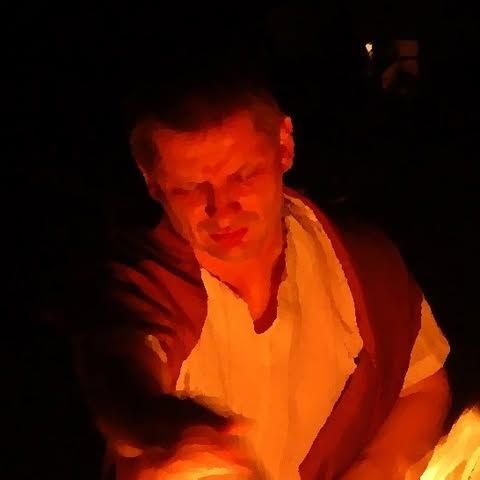
The teacher
सोमानन्दनाथ सरस्वती
Somanandanatha Sarasvati
Teacher of Sri Vidya and Kaula Tantra · Devipuram lineage
On Makara Sankranti 2008, at Devipuram, he received purnabhisheka and pitha adhikara — the authority to teach as a guru — from Sri Amritanandanatha Sarasvati. One of the first Sri Vidya initiates from the CIS, he teaches the foundations of Kaula Tantra, tantric sadhana and the sacred calendar of the Goddess, grounded in the shastras and a living lineage.
Biography
Somanandanatha Sarasvati is a teacher of Sri Vidya and Kaula Tantra in the lineage of Devipuram, India.
His path began in 1982 with the martial arts and traditional Eastern systems of mind–body training. Over more than three decades it led him through yoga, meditation and the study of India’s spiritual traditions, with teachers from Vietnam, Korea, China, Japan and India. Among his Indian teachers he names Vagish Shastri of Varanasi, Hemendranath Chakravarti and Sri Amritanandanatha Sarasvati.
Devipuram
In 2007 he first came to Devipuram, where Guruji Sri Amritanandanatha Sarasvati transmitted to him the Guru Paduka. On Makara Sankranti 2008, Guruji gave him purnabhisheka, pitha adhikara — the authority to teach as a guru — and his own Guru Paduka, and blessed him to carry the teaching to his homeland. Before leaving, he bowed at the samadhi of his paramaguru, Sri Svaprakashananda Tirtha, in Anakapalle.
Teaching
A living tradition rests on four supports: the Guru, the shastras, the parampara and the community of practitioners.
He keeps to the classical Kaula criteria for initiation and accepts personal disciples only rarely. His public work is a series of courses — from the foundations of Kaula Tantra and tantric sadhana to the worship of Ganapati, Shiva and the Devi at Navaratri — together with essays and translations from Sanskrit.
The lineage of Devipuram
Somanandanatha Sarasvati belongs to the Sri Vidya (Sri Kula) tradition of the Dattatreya sampradaya. His line of transmission runs from Sri Kalyanananda Bharati Tirtha through Sri Svaprakashananda Tirtha Avadhuta of Anakapalle — “Guru Garu” — to Sri Amritanandanatha Sarasvati, known as Guruji.
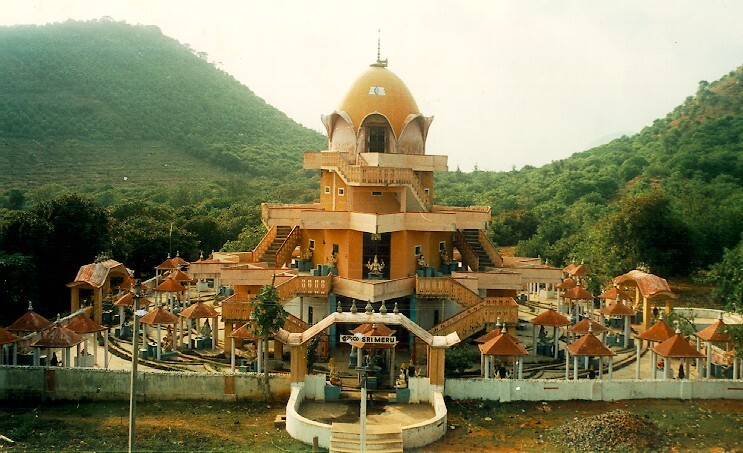
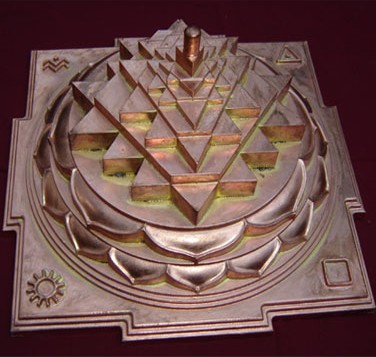
Guruji, born Dr Nishtala Prahlada Sastry (1934–2015), was a nuclear physicist who spent twenty-three years at the Tata Institute of Fundamental Research before giving his life to the Goddess. From 1983 he built Devipuram near Visakhapatnam. Its Sahasrakshi Meru temple, consecrated in 1994, is a three-storey Sri Chakra you can walk through, meeting the deities of the Khadgamala on the way.
Sri Vidya should be open to every sincere seeker, regardless of caste, creed, nationality or gender — the Divine Mother lives in each of us.
We continue his work in the Russian-speaking world.
01
स्वप्रकाशानन्द तीर्थ
Sri Svaprakashananda Tirtha
“Guru Garu” · Avadhuta of Anakapalle
Guruji’s own guru, of the Dattatreya lineage. Remembered by his disciples as fierce and unpredictable, in contrast to the gentle Guruji — yet one with him in essence.

02
अमृतानन्दनाथ सरस्वती
Sri Amritanandanatha Sarasvati
Guruji · founder of Devipuram · 1934–2015
Born Dr Nishtala Prahlada Sastry, a nuclear physicist at the Tata Institute of Fundamental Research. He built Devipuram and its Sri Meru temple, and opened Sri Vidya to every sincere seeker.
03 · Present teacher
सोमानन्दनाथ सरस्वती
Somanandanatha Sarasvati
Teacher of Sri Vidya and Kaula Tantra · Devipuram lineage
Our mission
We preserve and pass on Sri Vidya as a living Kaula tradition — carefully, in accordance with the shastras and through the unbroken parampara of Devipuram — so that sincere seekers can meet the tradition, its practices and its teacher with clarity and integrity.
Explore the courses